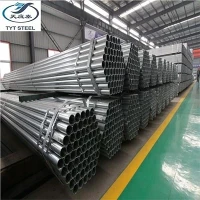
In terms of manufacturing process, steel pipes are generally divided into two main categories: seamless steel pipes and welded steel pipes, and welded steel pipes are further subdivided into straight seam welded pipes and spiral welded pipes. How to tell these three types of steel pipes apart? We will explain in detail below:
First: Seamless Steel Pipes
Seamless steel pipes are made from a whole solid steel billet (also called round billet) through processes including piercing, hot rolling, cold rolling or cold drawing, with no weld seam on the entire pipe body. Its production process is the same as that of hot-rolled I-beams and channel steels, similar to kneading plasticine without any welding involved in the whole process, so no weld seam is generated, and the overall integrity is very high. Its core feature is high structural uniformity. With no weld seam, it is like having an impenetrable protective layer with almost no weak points, and its mechanical properties are relatively consistent in all directions. It is also pressure-resistant, high-temperature resistant and corrosion-resistant, so it is the first choice for pressure-bearing fluid pipelines (for transporting water, oil, gas, etc.), and can withstand higher pressure and temperature. Its disadvantages are complex production process and high manufacturing cost. Besides, limited by equipment and billet specifications, it is usually very difficult to produce seamless steel pipes with extra large diameters.

Next: Welded Steel Pipes
Welded steel pipes include two sub-types: straight seam welded pipes and spiral welded pipes. They are manufactured by bending and forming steel plates or steel strips first, then connecting the joints via different welding methods (such as resistance welding, arc welding, etc.). Their advantages include high production efficiency and low cost: raw materials are easy to obtain, production can be carried out continuously, and their cost is usually lower than seamless pipes of the same specification.
They can be produced in large diameter and thin wall types, with a very wide range of diameter specifications. Their disadvantages are that there is a potential weak point at the weld area, properties including strength and toughness of the weld may differ from the base metal, so strict quality control is required. In addition, their wall thickness uniformity is slightly worse than seamless pipes, as the extrusion force on the pipe wall during the bending process will affect the thickness uniformity. The production processes of the two types of welded pipes are also different:
Straight Seam Welded Pipes
Simply put, its production process is to roll a steel plate into a cylindrical shape and then weld the joint together. The main weld of straight seam welded pipes is parallel to the longitudinal direction of the pipe (the direction of bending moment action). When subjected to longitudinal bending, the maximum stress appears at the top and bottom of the pipe wall (far from the neutral axis).

Spiral Welded Pipes
Its core production process is to continuously bend the steel strip in a spiral direction, and weld the joint synchronously during the bending process for one-time forming, which is similar to rolling a thin note around a cylinder to form a tube. The weld of spiral welded pipes forms an angle with the pipe axis (usually 45-65 degrees). When the pipe is subjected to longitudinal bending, the maximum principal stress is in the longitudinal direction, while the spiral weld is in the oblique direction.
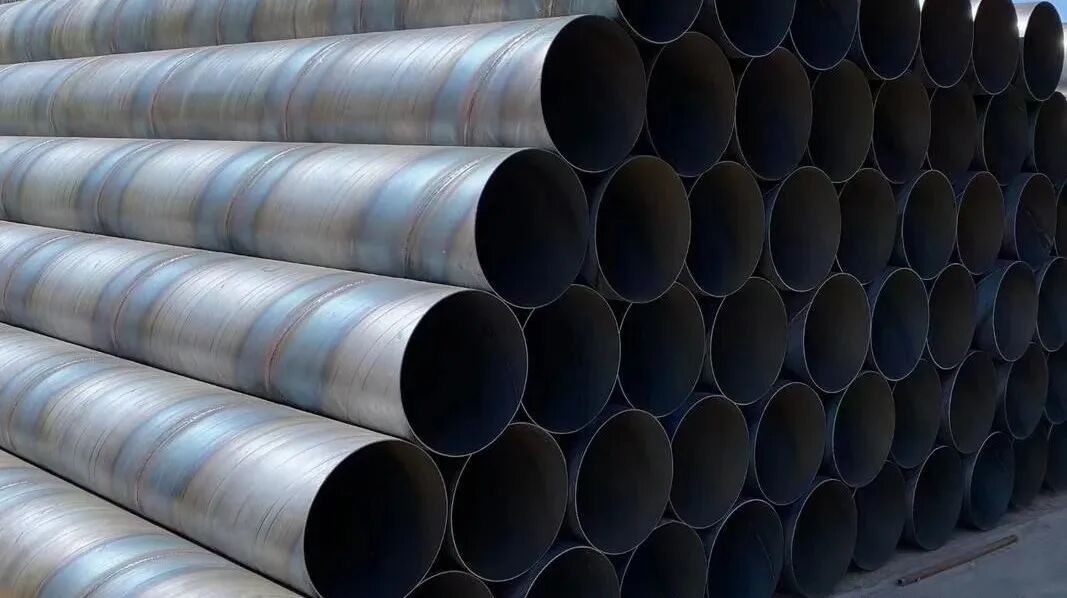
It is impossible to simply judge which of the two welded pipes is better, the choice should be made according to the main stress state of the application scenario: If the structure is mainly subjected to axial pressure with very small bending moment (such as deep piles, some tower structures, general-pressure fluid transmission), spiral welded pipes have advantages in economy and stability. If the structure bears obvious bending, torsion or combined compression-bending loads (applicable to most building steel structures, crane booms, pressure pipelines), straight seam welded pipes (especially longitudinal submerged arc welded pipes) should be the first choice, as their bearing capacity reliability and safety are much higher than spiral welded pipes.