Three prices, three letters, one question: who pays for what, and at what moment does the pipe stop being the supplier's problem?
Most sourcing teams compare FOB, CIF and DDP quotes as if they were three bids for the same delivery. They are not. Each term hands you a different set of jobs, a different stack of invoices, and a different point at which transit damage becomes your loss instead of the mill's. On a 25-tonne order the spread in total cost is real money. The spread in exposure when something goes wrong is usually bigger.
Below is a working breakdown of the three terms under Incoterms 2020, the charges that go missing from quotes more often than anyone admits, and a landed-cost format you can put in front of a finance controller without being asked to redo it.
First, the rule that causes more disputes than any other
Risk transfer, payment milestones and quality liability are three separate things. Incoterms only governs the first one.
A supplier can hand over risk at the Tianjin terminal, get paid thirty days later, and still owe you a replacement container if the zinc coating measures 40µm against a 70µm specification. The reverse happens just as often: you own the risk from the moment the pipe is on board and still hold a perfectly valid quality claim. Buyers who conflate the two spend three weeks arguing about the wrong clause while the container sits on the dock accruing demurrage at USD 150 a day.
So keep them apart. Use the Incoterm to allocate transport cost and transit risk. Use the purchase contract, the technical annex and the pre-shipment inspection protocol to govern everything about the goods themselves. Any supplier who resists that split is telling you something useful.
The three terms side by side
|
Term |
Seller handles |
You handle |
Risk passes to you |
Typical quote vs FOB |
|
FOB (named port of shipment) |
Export clearance, loading on board your nominated vessel, shipping documents |
Freight booking, ocean freight, insurance, import clearance, duties and taxes, all onward transport |
When the cargo is fully loaded on board at the origin port |
Baseline |
|
CIF (named port of destination) |
Export clearance, ocean freight to your port, minimum-cover cargo insurance |
Import clearance, duties and taxes, destination terminal charges, unloading, inland delivery |
Same as FOB - on board at origin, not at destination |
+8% to +15% |
|
DDP (named place of destination) |
Everything, including import clearance, duties, taxes and delivery to your address |
Taking delivery, unloading, anything the contract explicitly excludes |
When the cargo arrives at your named place and is ready to unload |
+35% to +60% |
Two things in that table are worth reading twice. Under CIF, risk passes at origin, not at the destination port. And under DDP, risk passes before unloading finishes, which is a gap that gets priced in at the worst possible moment.

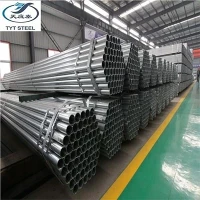
Galvanized steel pipe bundles loaded into a 40HQ container at Tianjin port
FOB: you are buying the goods, not the journey
Under FOB, the supplier's job ends once the pipe is cleared for export and loaded on the vessel you booked. Everything downstream is yours: freight, insurance, import clearance, duty, and the truck from the port to your yard.
The upside is control. You pick the carrier, the sailing, the insurance policy and the warehouse. If you buy from three mills in two provinces, FOB lets you consolidate into one container and negotiate freight on your own volume instead of paying whatever the supplier's forwarder charges. On regular volumes that difference alone often covers a full-time logistics coordinator.
The catch is that "FOB" as it appears on a Chinese quotation is frequently not FOB. Origin terminal handling, documentation fees, export declaration, and sometimes an inland haulage leg get stripped out of the quoted price and invoiced later as "local charges." In the quotes we see, those extras run from USD 120 to USD 400 per container depending on the port and how the forwarder structures it. Ask for a line-item origin cost sheet before you compare anything. A supplier who cannot produce one has never had a buyer ask.
One more technical point that saves real money on steel pipe: FOB is a sea and inland-waterway term only. For containerised pipe, which is how almost all galvanised tube under 8 inches moves, FCA is the cleaner choice. Under FOB the seller is done once the goods are on board; under FCA the seller is done once the container is handed over to your carrier at the named place. With FCL containers that sit in a terminal yard for four days before loading, FCA closes a liability hole that FOB leaves open. Plenty of suppliers will still quote FOB because it is what their system defaults to. That is not a reason to accept it.
CIF: convenient, and widely misunderstood
CIF is the middle option. The supplier arranges and pays the ocean freight to your named destination port and buys cargo insurance for the voyage. You take over at the port: import clearance, duty, terminal charges, unloading, inland transport.
For a buyer without a freight forwarder relationship, that is genuinely useful. The quoted price lands much closer to a port-arrival number, and one party owns the ocean leg end to end.
The expensive mistake sits in the assumption that CIF means the supplier carries risk to your port. It does not. Risk moves to you when the pipe is loaded on board at origin. The supplier paying the freight and the premium does not make them liable for what happens mid-ocean. If the container takes on water off Singapore, you are the claimant, not them.
That matters more for galvanised pipe than for most cargo, because the failure mode is specific and predictable. A container loaded in Tianjin in January and discharged in Houston in February passes through a temperature swing of thirty degrees or more. Cold steel plus warm humid air equals condensation on the coating, and condensation on a freshly galvanised surface equals white rust. It is not a manufacturing defect and it is not covered by the minimum insurance the seller is obliged to buy. Under CIF the seller only has to purchase Institute Cargo Clauses (C) cover at 110% of contract value, which is a named-perils policy: it responds to sinking, fire, collision and little else. Rust, moisture damage, bending and crushed bundles are typically excluded unless they result from the vessel being in an accident.
If you accept CIF, do four things before the container loads:
Ask for the certificate of insurance, not a promise of one, and read the clauses named on it.
Upgrade to ICC (A) cover if the premium difference is tolerable. On a USD 21,000 cargo it usually costs less than USD 60 more.
Confirm the insured value, the deductible, and whether the policy names you as loss payee.
Get the claim documentation list in writing. Missing one document in a foreign-language claim file is how a valid claim dies.
Also confirm which terminal charges at destination are excluded. CIF quotes routinely stop at the ship's hook and leave destination THC, documentation and container cleaning to you - often another USD 300 to 500.
DDP: the most certain delivery and the murkiest invoice
DDP pushes everything onto the seller. Export clearance, import clearance, duty, VAT, and delivery to the address you name. For a buyer without a local import entity, a customs broker, or a warehouse in the destination market, it removes an entire department's worth of work.
It also concentrates every compliance risk in a place you cannot see. Three things go wrong on DDP steel pipe shipments with depressing regularity.
The VAT you pay is often VAT you cannot reclaim. When the seller acts as importer of record, the import VAT is assessed against their registration, not yours. In most jurisdictions that means you cannot recover it as input tax, so a 20% VAT line becomes a real 20% cost rather than a cash-flow item. On a EUR 40,000 order that is EUR 8,000 that quietly evaporates. If VAT recovery matters, DDP is the wrong term and DAP is the right one: under DAP you are the importer of record, you clear and pay duty and VAT yourself, and the seller still delivers to your door.
The seller may not legally be able to act as importer. The EU generally requires an established entity or a fiscal representative. India requires an IEC. Brazil requires a local registration. Suppliers work around this with a nominee importer, which is a structure that works fine until customs audits it.
Trade remedy measures are the buyer's problem even when the paperwork is the seller's. Anti-dumping and countervailing duties, safeguard quotas and Section 301 tariffs are assessed on origin and HS code, not on who clears. The US runs AD/CVD orders plus Section 301 tariffs on Chinese-origin steel; the EU applies a safeguard quota that carries a 25% out-of-quota duty; Australia, India and Brazil have all run anti-dumping cases on Chinese coated steel at various points. When a pipe shipment crosses HS 7306.30 into a market with an active measure, the difference between the correct rate and the assumed rate can be five figures per container. A DDP price built on the wrong assumption gets renegotiated at the port, with your cargo as the collateral.
Before you sign a DDP quote, get written answers to six questions: Does the price include duty at the specific HS code and origin? Import VAT? Clearance and brokerage? Destination terminal and storage? Unloading at my address? Who is named as importer of record? Anything left blank is a future invoice.
How to choose without overthinking it
Match the term to what your team can actually execute, not to what looks cheapest on the page.
Take FOB (or FCA for containers) if you ship regularly, already have a forwarder you trust, and want freight cost visible and negotiable. You will do more admin and you will know exactly what you are paying for.
Take CIF if you want the ocean leg handled but can manage clearance and inland delivery yourself. Then buy your own top-up insurance, because the policy attached to a CIF quote is thinner than the name suggests.
Take DDP only if you have no local import capability, and only with a contract that lists inclusions and exclusions line by line. If you have an import entity and want to reclaim VAT, take DAP instead. It gives you the door delivery without handing over your tax position.
Compare landed cost, not quotes
The only fair comparison is total cost to your floor. Use this formula, and force every supplier's number into it:
Landed cost = goods value + origin charges + freight + insurance + destination port charges + duty and trade remedy + VAT (if unrecoverable) + inland delivery + unloading + inspection, storage and demurrage allowance
Here is what that looks like on a real-shaped order: 25 tonnes of hot-dip galvanised pipe, 2" SCH40, 6m lengths, Tianjin to a warehouse in Los Angeles. Figures are illustrative and rounded; rates move, and your HS classification will drive the duty line.
|
Line |
FOB quote |
True landed |
|
Goods, 25t USD 830/t |
20,750 |
20,750 |
|
Origin charges excluded from the quote |
- |
180 |
|
Ocean freight, 1 × 40HQ |
- |
2,400 |
|
Cargo insurance |
- |
90 |
|
Destination THC and doc fee |
- |
350 |
|
Customs brokerage |
- |
150 |
|
Duty, MPF and Section 301 (illustrative) |
- |
5,700 |
|
Inland delivery and unloading |
- |
570 |
|
Total |
20,750 |
30,190 |
|
Per tonne |
830 |
1,208 |
The FOB number was 31% below what the pipe actually cost to put on the floor. This is the single most common reason a "cheap" supplier turns out not to be, and the reason a CIF quote at USD 940/t can beat an FOB quote at USD 830/t once freight is priced honestly.
Run the same table for all three terms before you shortlist anyone. Any supplier who cannot or will not fill in the excluded-charge column is not giving you a price. They are giving you a starting position for a negotiation you will lose later.
Contract clauses that prevent the argument
Once the term is chosen, the contract has to close the gaps the term leaves open.
Name the version. Write "Incoterms® 2020" into the contract. Older templates still floating around reference Incoterms 2000, and the insurance and unloading provisions differ.
Name the place precisely. "CIF Los Angeles" is not a place; the terminal is. For DDP, give a street address with a loading dock or a crane capacity note. For FOB, name the terminal, not just the port.
Write the risk transfer point into words and pair it with the unloading obligation, especially under DDP where risk passes before unloading is complete.
Attach a technical annex covering grade and standard (ASTM A53, EN 10255, API 5L as applicable), wall thickness tolerance, length tolerance, coating mass in g/m² and the equivalent micron reading, straightness, and end finish. "Galvanised" alone is not a specification.
Set an acceptance standard for rust rather than a promise of no rust. Zero-rust clauses are unenforceable in practice; a defined limit on white rust area per bundle and a defined rejection threshold for red rust are not.
Require third-party pre-shipment inspection before loading, with the inspector's scope written into the PO: dimensional check, coating thickness at defined sampling points, weight verification, bundle count, and photographs of every bundle end.
Define the short-shipment and wrong-product process with a claim window, required evidence and a response deadline. Thirty days from discharge is normal. Silence is not acceptance.
Keep payment terms off the risk clause. Milestones against inspection, bill of lading and discharge are fine. Tying payment to risk transfer is how buyers end up paying for cargo they have not seen.
FAQ
(1)Is CIF or FOB better for galvanised steel pipe?
Depends on whether you have freight capability, not on the price. If you ship more than a few containers a year and can book your own freight, FOB or FCA gives you cost visibility and something to negotiate with. If not, CIF saves coordination work, but budget for top-up insurance because the seller's minimum cover will not respond to rust or handling damage.
(2)Under DDP, who pays for unloading? You do. Under Incoterms 2020, DDP risk passes when the cargo arrives at the named place and is ready for unloading, which means the act of unloading is your responsibility and your cost unless the contract says otherwise. Put it in writing either way, and confirm whether the truck has a liftgate or whether you need a forklift on site.
(3)Does a DDP price include import VAT? It should, because the seller is obliged to clear for import and pay all duties and taxes. Whether you can recover that VAT is a separate question, and usually you cannot, because the assessment is against the seller's importer registration. If VAT recovery is material to your margin, use DAP and act as importer of record.
(4)If the pipe rusts in transit under CIF, can I claim from the seller?
Not on the basis of the trade term. Risk passed to you when the cargo loaded at origin, so the claim sits with your insurer - and under the minimum ICC (C) cover the seller must buy, rust and moisture damage are excluded. You need ICC (A) cover, or a contractual quality clause that survives transit, to have a claim at all.
(5)When exactly does risk transfer under FOB?
When the cargo is fully loaded on board the vessel at the named port of shipment. Not when it reaches the terminal, not when the container is gated in, not when the bill of lading is issued. That gap between gate-in and on-board is why FCA is often the better term for containerised pipe.
Bottom line
None of these three terms is better. Each one moves work and risk from one side of the table to the other, and the price adjusts accordingly. What separates a good decision from an expensive one is whether you have priced the whole chain and written down who does what at the handover points.
Pick the term your team can execute. Fill in every excluded charge before comparing. Then spend your negotiation energy on the specification and the inspection clause, because that is where galvanised pipe orders actually go wrong - not in the freight rate.
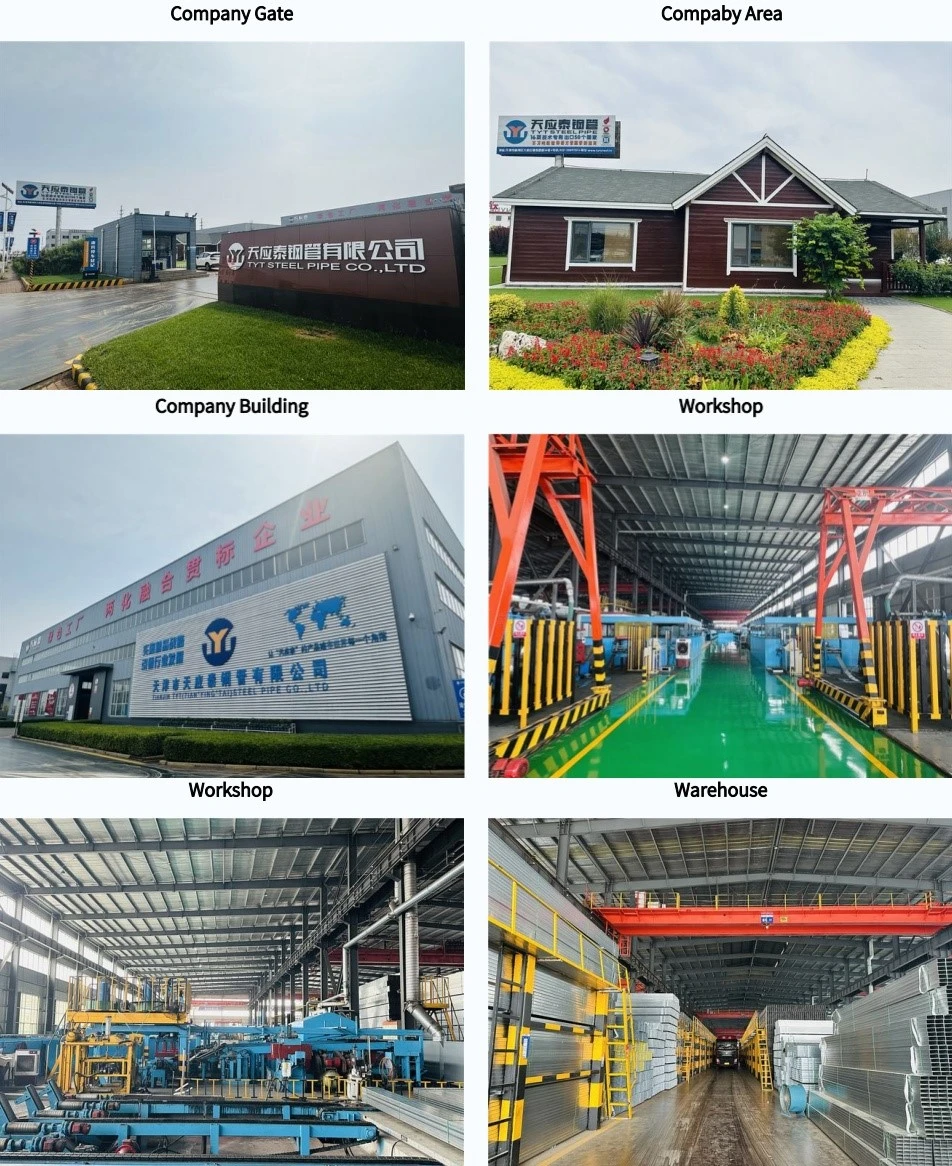
✅ Supported trade terms: FOB, CIF, DDP
💬 Feel free to reach out with your inquiry for a tailored quote!