Welded steel pipes – including longitudinal (ERW) and spiral welded pipes – are heavy-duty industrial products that face a brutal journey during export. After leaving the factory, they go through inland transportation, port handling, and long ocean voyages. The combination of high humidity, salt spray, constant ship vibration, and rough handling can easily lead to rust, thread damage, deformed pipe ends, and surface scratches. To ensure your pipes reach overseas customers in perfect condition, a systematic protection process must be applied before they leave the factory. Below is a step-by-step breakdown of the essential procedures used to protect welded steel pipes for export.
1. Surface Preparation: Building a Rust-Proof Foundation
After manufacturing, welded steel pipes often have residual rolling oil, dirt, or mill scale. If the pipe is a "black" (non-galvanized) welded pipe, its bare surface is extremely vulnerable to rust. Surface preparation is the critical first line of defense.
Cleaning & Rust Removal: The pipes undergo shot blasting or acid pickling to remove iron oxide scale, existing rust spots, and oil contaminants. Shot blasting also creates a slightly rough surface profile, which helps the subsequent protective coating adhere much better.
Anti-Corrosion Primer Coating: For non-galvanized pipes, the most common method is to apply a layer of anti-rust paint. Typically, alkyd anti-rust paint or epoxy zinc-rich primer is used. The coating must be uniform, cover every inch of the external surface, and be completely dry before moving to the next step.
Hot-Dip Galvanizing: If the customer requires a much higher level of corrosion resistance – often for harsh marine environments – the entire pipe is hot-dip galvanized. The zinc coating offers sacrificial anode protection, effectively resisting salt spray corrosion for decades. However, even galvanized pipes need special care on their cut ends and threads (see below).
2. Pipe End Protection: Guarding the Most Vulnerable Part
The pipe ends, especially threaded ones, are the most sensitive and easily damaged areas. During shipping, any collision can damage threads, and exposure to moisture and salt air can quickly cause corrosion. If the pipe end is compromised, the entire pipe may become unusable.
Applying Anti-Rust Oil or Grease: After surface treatment, workers apply a thick layer of anti-rust oil or grease to the internal and external threads or the beveled ends. This heavy, adhesive grease acts as a powerful barrier against moisture and salt mist, providing short- to medium-term protection inside the packaging.
Installing Pipe End Protectors:
Thread Protectors (Plastic or Steel-Composite Caps): Threaded ends must be fitted with purpose-made plastic caps. These caps have internal threads that screw on tightly, providing both rust prevention and mechanical shock absorption.
Bevel Protectors (Impact-Resistant Sleeves): For pipes prepared for welding with a beveled end, hard plastic or rubber sleeves are pressed over the end. They are often secured with tape or friction fit to prevent the bevel from getting dinged, deformed, or rolled during lifting and transport.
Pipe End Expansion Plugs: These are used to protect the inner diameter and prevent the pipe end from becoming oval due to external pressure.
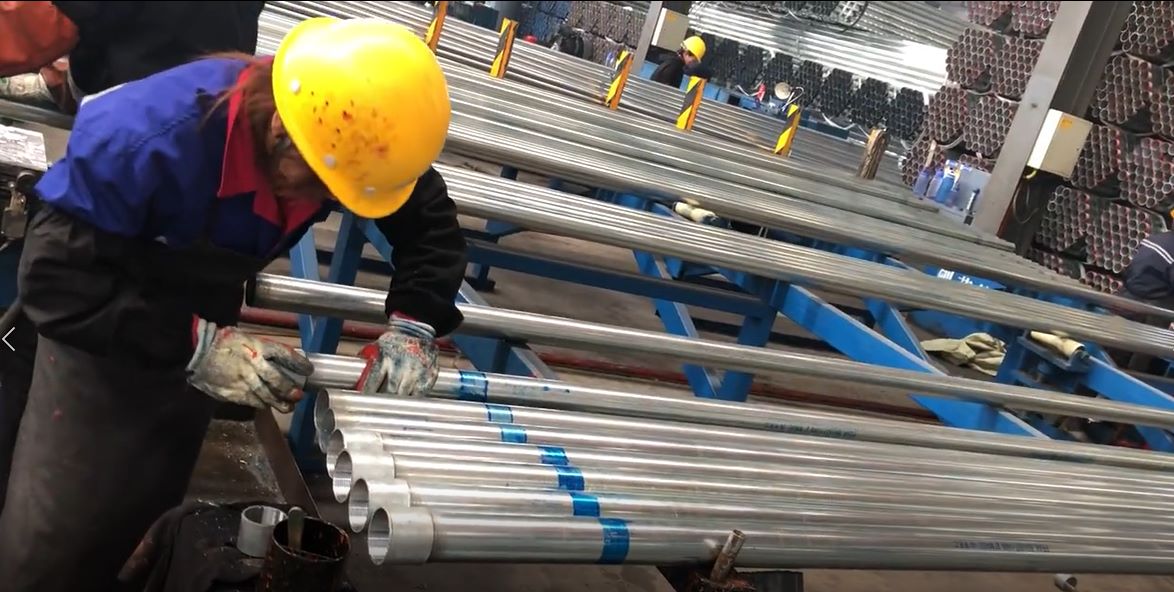
(TYT STEEL workers are carefully applying anti-rust oil to the threaded ends of galvanized steel pipes and then fitting protective caps on them. The oil provides a barrier against moisture and oxidation, while the caps protect the threads from physical damage and contamination during transport and storage. It's a simple yet essential quality protection step that keeps the pipes in perfect condition until they reach the customer.)
3. Pipe Body Wrapping: Combining Moisture-Proofing and Cushioning
Protecting only the ends is not enough. The entire length of the pipe must be guarded, either individually or as a bundle.
Individual Pipe Wrapping (VCI Paper & Plastic): For high-precision or high-surface-finish pipes (e.g., precision welded tubes, hydraulic pipes), each piece is often wrapped individually. An anti-rust VCI (Volatile Corrosion Inhibitor) paper is applied first; it continuously releases invisible, rust-inhibiting molecules inside the sealed space. The pipe is then sealed in a waterproof plastic bag, sometimes with the air evacuated. A desiccant pouch can be enclosed to absorb residual moisture.
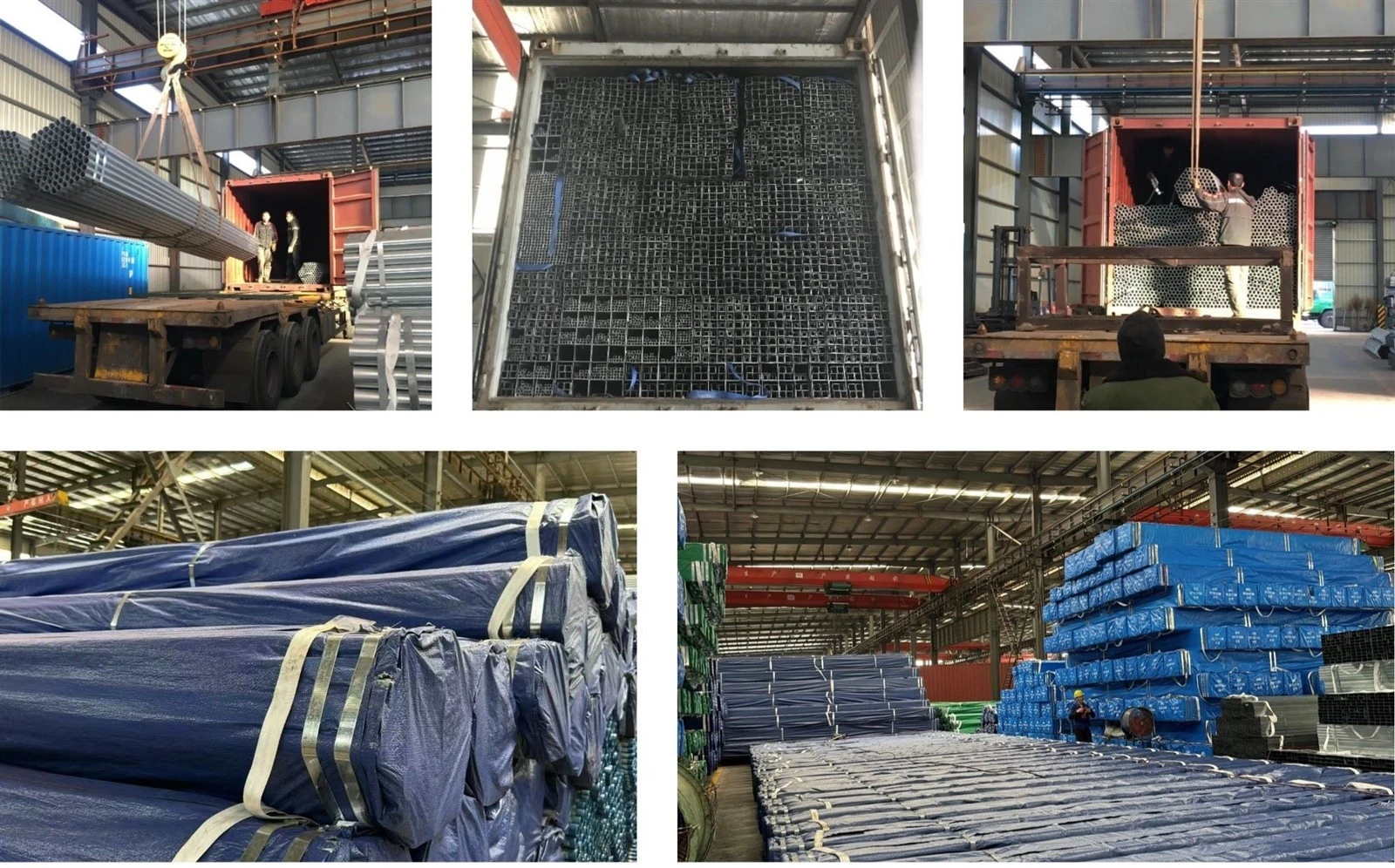
Bundle Wrapping: Most structural welded pipes are exported in bundles. Before bundling, wooden strips, plastic spacers, or rubber pads are placed between layers of pipes. This prevents direct metal-to-metal friction and safeguards the anti-rust coating. The entire bundle is then tightly wrapped in waterproof kraft paper, bitumen-infused moisture-proof sheeting, or heavy-duty stretch film, creating a semi-sealed envelope.
4. Strapping & Securing: Mechanical Damage Prevention at Sea
In ocean shipping, constant rolling and vibration are inevitable. If bundles are not secured tightly, they can break loose, slide, and suffer severe impact damage.
Steel and Composite Strapping: High-strength steel strapping (often painted or galvanized) is applied at multiple points along the length of the pipe bundle – usually at both ends, the center, and evenly spaced in between. For painted pipes, sturdy corner protectors or rubber pads are placed under the straps to prevent them from cutting into the paint surface. For long-haul ocean freight, flexible composite fiber packing straps can also be used; they maintain constant tension and absorb vibration.
Cradles & Pallets (Steel/Wood): Export pipe bundles are often placed on specially fabricated steel cradles or fumigated wooden pallets. The base of the cradle is designed with forklift slots for easy loading. The pipes are bolted or strapped firmly to the cradle, making the entire bundle a rigid, unified block that cannot shift or roll into other cargo.
Container Internal Securing: When shipping in containers, the pipes must be immobilized inside the box. Wooden beams, inflatable dunnage airbags, and steel lashing cables are used to wedge and brace the cargo against the container floor and walls, ensuring there is zero movement even in heavy seas.
5. Marking & Final Weather Protection
The last steps involve clear identification and an outer shield against rain and sea spray.
Shipping Marks: Clear, waterproof ink is used to print standardized shipping marks on the outside of the packaging. These marks include the contract number, dimensions, steel grade, heat number, weight, port of destination, and critical handling symbols like "Center of Gravity" and "Lifting Points". This ensures proper, careful handling.
External Tarpaulin Cover: For pipes shipped as break-bulk on the deck of a vessel, the topmost protective layer is a heavy-duty PVC tarpaulin or woven waterproof cloth. It is tied down and secured over the entire bundle and remains in place for the duration of the voyage. This cover blocks driving rain, seawater splash, and direct sunlight (which can cause condensation inside the package).
Conclusion:
Protecting welded steel pipes for export is a layered, end-to-end process that combines chemical protection with physical reinforcement. From initial surface cleaning and priming, to precisely fitted pipe end caps, to moisture-barrier bundling and robust steel strapping onto cradles, every step is essential. By selecting the right combination of these methods based on the customer's requirements and the length of the ocean voyage, exporters can ensure their "Made in China" steel pipes arrive globally rust-free, damage-free, and ready for immediate use.
Learn More About TYT Welded Steel Pipe Exports👆