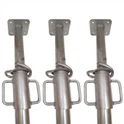
Galvanized Steel are those steel that has been covered with a layer of zinc metal.
Galvanized steel can be made into a strong plumbing or tubing material -- one that resists corrosion from exposure to water or the elements. It has been used used for water-supply pipes or as a strong tubing for outdoor applications.
It is most commonly used for outdoor construction like fences and handrails, or for some interior plumbing. It is also sometimes called galvanized iron pipe. Galvanized steel pipe has been coated with a layer of zinc. The zinc provides a barrier against corrosion so that the pipe may be exposed to the outdoor environmental elements. The protective barrier proves equally effective against damage from indoor humidity.
Galvanized steel pipe is covered with a zinc material to make the steel pipe more resistant to corrosion.
History of Galvanized Steel Pipe
The process of galvanization was first discussed by scientists in the 1770s, nearly 60 years before it was finally introduced in the 1830s. French engineer Stanislaus Tranquille Modeste Sorel took out the first patent for the process in 1937, and began manufacturing it soon after. By the 1850s, Europe was producing galvanized steel out of manufacturing plants located around the continent. The United States followed shortly thereafter, opening its first plant in the 1870s.
To create galvanized steel pipe, steel materials are placed into a molten bath of zinc. This process is also called hot dip galvanization. The two metals are chemically bound to one another in this process, and will therefore never separate, resulting in a more resistant and longer lasting version of steel.