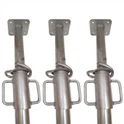
Galvanized surface treatment
Zinc plating refers to a surface treatment technology that coats a layer of zinc on the surface of metals, alloys or other materials for aesthetics and rust prevention. The main method used is hot-dip galvanizing.
Zinc is soluble in acid and alkali, so it is called amphoteric metal. Zinc hardly changes in dry air. In humid air, a dense basic zinc carbonate film will be formed on the zinc surface. In atmospheres containing sulfur dioxide, hydrogen sulfide, and marine atmospheres, zinc has poor corrosion resistance, especially in high-temperature and high-humidity atmospheres containing organic acids, zinc coatings are easily corroded. The standard electrode potential of zinc is -0.76V. For the steel substrate, the zinc coating is an anodic coating. It is mainly used to prevent corrosion of steel. The quality of its protective performance is closely related to the thickness of the coating. After the zinc coating is passivated, dyed or coated with a light protectant, its protective and decorative properties can be significantly improved.