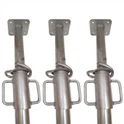
In the manufacturing industry (including both metal stamping, and metal spinning) galvanized commonly refers to galvanized steel. Galvanized steel is regular steel sheets that have been coated in zinc to make them corrosion resistant. Regular steel is made of iron which will rust when exposed to moisture, either in the form of rain or ambient humidity. Over time rust will corrode a steel part to the point of failure. To prevent steel parts from rusting there are two options:
Switch to a metal that will not corrode when exposed to water
Coat the steel with a physical barrier to prevent water from reacting with the iron
As with most decisions in manufacturing, both of these options are primarily evaluated in terms of cost.
Differences between Galvanized Steel, Stainless Steel, and other Metals
Occasionally switching from steel to another metal that does not rust (option A) such as stainless steel or aluminum is not an option simply because of the difference in cost: Economically a substitution doesn’t make sense. Aluminum is more expensive than steel, and stainless steel is a lot more expensive that aluminum. Moreover steel might have certain physical characteristics, such as strength or weight that prohibits a switching for a specific application. The next option is to protect the steel with a physical barrier such as paint or a coating – this is what galvanizing does best.
Hot Dip Galvanizing (HDP)
Galvanizing is a zinc coating applied to sheets of steel through a process called “continuous hot-dip,” in which steel sheet passes through a bath of molten zinc. The liquid zinc bonds to the iron in the steel forming a protective layer on both sides of the sheet. The steel sheet can then be spun into a finished part because the zinc coating does not flake or peeling off during the metal spinning process. The finished part resists corrosion without any additional or secondary painting or coating, making galvanized spinnings the most economical process for protecting steel from corrosion.