I. Event Review: Hong Kong Fire Exposes Risks of Bamboo Scaffolding
On the afternoon of November 26, 2025, a fire broke out at a high - rise building construction site in Kowloon, Hong Kong. The fire quickly spread along the bamboo scaffolding, with thick smoke billowing. The rescue work was hindered by the flammability of bamboo. As of the morning of November 27, the official report stated that 44 people had died. Preliminary investigations showed that the rapid burning of the bamboo scaffolding intensified the spread of the fire, once again raising questions about traditional building materials.
The historical data is shocking (statistics from the Development Bureau of Hong Kong):
In the past 10 years, there have been 14 major accidents related to bamboo scaffolding in Hong Kong, of which 8 involved fires or structural collapses.
During the typhoon season in 2024, 67% of scaffolding accidents were directly related to the structural fragility of bamboo (report from the Civil Engineering Department).

II. Four Major Disadvantages of Bamboo Scaffolding
01.Prominent safety hazards
Flammability: The ignition point of bamboo is only 150°C, and it may catch fire when exposed to sparks (the melting point of steel pipes is > 1,500°C, making them almost non - flammable).
Structural fragility: During typhoons or strong winds, the绑扎 joints of bamboo are prone to loosening, leading to an overall collapse risk.
02.Insufficient durability
The humid climate in Hong Kong accelerates the mildew and insect infestation of bamboo, with an average service life of only 1 - 2 years (steel pipes can last for more than 10 years).
Frequent replacements lead to increased hidden costs, resulting in low long - term economic benefits.
03.Efficiency and cost traps
Installation relies on manual binding by skilled workers, taking three times as long as the steel pipe and fastener system.
Maintenance costs are high, including regular inspections, reinforcements, and replacement of damaged parts.
04.Low international recognition
Bamboo scaffolding has been completely banned in Europe, America, Singapore, Japan, etc. Only a few regions such as Hong Kong and Vietnam still use traditional craftsmanship.
It does not meet modern building safety standards (such as EN12810, OSHA), restricting the international development of projects.

III. Irreplaceable Advantages of Steel Pipe Scaffolding
01.Superior safety performance
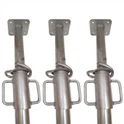
Fire - proof: Steel is non - flammable, significantly reducing the risk of fire.
Wind - resistant: The modular design is certified by EN12810 and can withstand typhoons of level 12 (the measured wind - resistance capacity is up to 60m/s).
02.Long - term economic benefits
Although the initial cost is 30% higher than that of bamboo scaffolding, the full - life cycle cost is 50% lower (including maintenance and depreciation).
It reduces the risk of work stoppages and ensures the project progress.
03.Environmental protection and sustainability
Modern galvanized steel pipes can be 100% recycled, with 40% lower carbon emissions than the repeated treatment of bamboo, meeting the global trend of green buildings, such as the Singapore Green Mark standard.

Conclusion
Yesterday's fire should not just be a news hotspot but a turning point for the safety upgrade of the construction industry in Hong Kong. When traditional craftsmanship fails to meet modern safety requirements, steel pipe scaffolding, with its reliability, economy, and environmental friendliness, becomes an inevitable choice. As the times progress, building safety also needs to keep pace.