1. Choose a suitable site and warehouse
1. The site or warehouse where steel is kept should be selected in a clean, well-drained place, away from factories and mines that produce harmful gases or dust. Weeds and all debris should be removed on the site to keep the steel clean. (Steel Network www.gangcai.com)
2. No acid, alkali, salt, cement and other materials that are corrosive to the steel in the warehouse. Different types of steel should be stacked separately to prevent confusion and contact corrosion.
3. Large section steel, steel rails, steel plates, large diameter steel pipes, forgings, etc. can be stacked in the open air.
4. Small and medium-sized steel, wire rod, steel bar, medium-caliber steel pipe, steel wire and steel wire rope, etc., can be stored in a well-ventilated shed, but must be covered with a toe.
5. Some small steels, thin steel plates, steel strips, silicon steel sheets, small-diameter or thin-walled steel pipes, various cold-rolled and cold-drawn steels, and metal products with high prices and easy corrosion can be stored in the warehouse.
6. The warehouse should be selected according to the geographical conditions. Generally, an ordinary closed warehouse is used, that is, a warehouse with a roof, a surrounding wall, tight doors and windows, and a ventilation device.
7. The warehouse requires attention to ventilation in sunny days, and closure of moisture-proof in rainy days, and often to maintain a suitable storage environment.
Second, reasonable stacking, advanced first release
1. The principle of stacking is that under the conditions of stable palletizing and ensuring safety, palletizing should be done according to varieties and specifications. Different types of materials should be palletized separately to prevent confusion and mutual corrosion.
2. It is forbidden to store items that have a corrosive effect on the steel near the pallet.
3. The bottom of the stack should be high, firm and flat to prevent the material from being damp or deformed.
4. The same kind of materials are stacked separately according to the order of storage, which is convenient to implement the principle of advanced first.
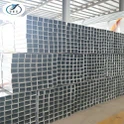
5. The section steel stacked in the open air must have wooden pads or strips underneath, the stacking surface is slightly inclined to facilitate drainage, and pay attention to the placement of the material straight to prevent bending and deformation.
6. Stacking height, manual operation does not exceed 1.2m, mechanical operation does not exceed 1.5m, and stack width does not exceed 2.5m.
7. There should be a certain channel between the stack and the stack, the inspection path is generally O. 5m, the access channel depends on the material size and transportation machinery, and is generally 1.5 ~ 2.0m.
8. The bottom of the stack is high. If the warehouse is the cement floor of Chaoyang, the height should be O.1m; if it is muddy ground, it must be O.2 ~ 0.5m. If it is an open field, the height of the cement floor is O.3 ~ O.5m, and the height of the sand surface is 0.5 ~ O.7m.
9. Angle and channel steels should be stacked in the open air, that is, with the mouth facing down, the I-beam should be placed upright, and the I-groove surface of the steel should not be facing upwards, so as to prevent rust from accumulating water.
3. Packaging and protective layer of protective materials
Preservatives or other coatings and packaging applied before the steel factory leaves the factory are important measures to prevent corrosion of the material. Care must be taken during transportation, loading and unloading to prevent damage and extend the storage period of the material.
4. Keep the warehouse clean and strengthen material maintenance
1. Before entering the warehouse, please pay attention to prevent rain or impurities, and wipe the material that has been rained or contaminated by different methods according to its nature. For example, use a steel wire brush with high hardness, use a cloth with low hardness, Cotton and other things.
2. Check the materials frequently after entering the warehouse. If there is rust, the rust layer should be removed.
3. It is not necessary to apply oil after the surface of the general steel is cleared, but for high-quality steel, alloy thin steel plate, thin-walled tube, alloy steel pipe, etc., the inner and outer surfaces of the steel need to be coated with anti-rust oil before storage.
4. The steel with serious corrosion is not suitable for long-term storage after derusting, and should be used as soon as possible.