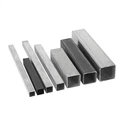
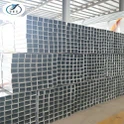
What are black steel pipes?
Black steel pipes are made of steel that has not been coated with a substrate such as zinc or paint. Since it has a dark color surface that is forms by iron oxide during the manufacturing process, it is called black steel pipe.
What are black steel pipes used for?
Black steel pipes have a variety of use thanks to their strength and needs for little maintenance. They tend to be used for transporting gas and water to rural areas and urban areas or for conduits that protect electrical wiring and deliver high pressure steam and air. In addition, black steel pipes are also used in oil and petroleum industries for piping large quantities of oil through remote areas.
Other uses of black steel pipes include gas distribution inside and outside homes, water wells and sewage systems. However, black steel pipes are never used for transporting potable water due to the fact that they tend to corrode in water and mineral of the pipe will dissolve into the water and clog the line as well.
What are black steel pipes used for?
Steel pipes are produced by two distinct methods that would eventually result in either a welded or seamless pipe. In both methods, raw steel is first cast into a more workable starting form. Then it is made into a pipe by stretching the steel out into a seamless tube or forcing the edges together and sealing them with a weld. The first methods for producing steel pipes were introduced in the early 1800s, and they have steadily evolved into the modern processes today.
Each year, millions of tons of steel pipe are produced. Its versatility makes it the most often used products in the steel industry. Steel pipes can be found in a range of places. Since they are strong, they are used underground for transporting water and gas throughout cities and towns. They are also employed in construction to protect electrical wires. What interesting about steel pipes is that they can be both strong and lightweight. This makes them ideal to be used in the bicycle frame manufacture. Steel pipes can also be found in automobiles, refrigeration units, heating and plumbing systems, flagpoles, street lamps, and medicine to name a few. Pipes have been used for thousands of years. The first use was probably by ancient agriculturalists to divert water from rivers and streams into the fields. It is also suggested that the Chinese used reed pipes for transporting water to desired locations as early as 2000 B.C.
Development of the modern day welded steel pipes can be traced back to the early 1800s. In 1815, William Murdock invented a coal burning lamp system. To fit the entire city of London with these lights, Murdock joined together the barrels from discarded muskets and used this continuous pipeline to transport the coal gas. When his lighting system proved successful there was a greater demand for long metal tubes. To produce enough tubes to meet such demand, a range of inventors set to work on developing new pipe-making processes. An early notable method for producing metal tubes quickly and inexpensively was patented by James Russell in 1824. In this method, he created tubes by joining together opposite edges of a flat iron strip. The metal was first heated until malleable. Then its edges are folded together and welded using a drop hammer. The pipe was finished by passing it through a groove and rolling mill. However, Russell’s method was not used for long because in the following year, Comenius Whitehouse developed a better method for making metal tubes. Called the butt-weld process, his process is the basis for the pipe-making procedures today. In this method, thin sheets of iron were heated and drawn through a cone-shaped opening. As the metal went through the opening, its edges curled up and created a pipe shape. The two ends were welded together to finish the pipe.
Welded pipe is formed by rolling steel strips through a series of grooved rollers that mold the material into a circular shape. Next, the unwedded pipe passes by welding electrodes. These devices seal the two ends of the pipe together. This process in the United States was opened in 1832 in Philadelphia. Gradually, there were some improvements made in the Whitehouse method. John Moon introduced one of the most important innovations in 1911. He suggested the continuous process method in which a manufacturing plant could produce pipe in an unending stream. He built machinery for this specific purpose and many pipe manufacturing facilities adopted it. While the welded tube processes were being developed, a need for seamless metal pipes arouses. Seamless pipes are those that do not have a welded seam. They were first made by drilling a hole through the center of a solid cylinder. This method was developed during the late 1800s. These types of pipes were ideal for bicycle frames because they have thin walls, are lightweight but strong. In 1895, the first plant to produce seamless tubes was built. As bicycle manufacturing gave way to auto manufacturing, seamless tubes were still needed for gasoline and oil lines. This demand was made even greater as larger oil deposits were found.
As early as 1840, ironworkers could already produce seamless tubes. In one method, a hole was drilled through a solid metal, round billet. The billet was then heated and drawn through a series of dies which elongated it to form a pipe. This method was inefficient because it was difficult to drill the hole in the center. This resulted in an uneven pipe with one side being thicker than the other. I n 1888, an improved method was awarded a patent. In this process, the solid billed was cast around a fireproof brick core. When cooled, the brick was removed leaving a hole in the middle. Since then new roller techniques have replaced these methods.
Standards of black steel pipes
What is ASTM?
ASTM International is an international standards organization that develops and publishes voluntary consensus technical standards for a wide range of materials, products, systems, and services. Some 12,575 ASTM voluntary consensus standards operate globally.
A group of scientists and engineers, led by Charles Benjamin Dudley formed ASTM in 1898 to address the frequent rail breaks affecting the fast-growing railroad industry. The group developed a standard for the steel used to fabricate rails. Originally called the “American Society for Testing Materials” in 1902, it became the “American Society for Testing and Materials” in 1961 before it changed its name to “ASTM International” in 2001 and added the tagline “Standards Worldwide”. In 2014, it has changed the tagline to “Helping our World Work better”. Now, ASTM International’s headquarters is in West Conshohocken, Pennsylvania, about 5 mi (8.0 km) northwest of Philadelphia, and it has offices in Belgium, Canada, China, Peru, and Washington, D.C.
ASTM’s steel standards
ASTM’s steel standards are instrumental in classifying, evaluating, and specifying the material, chemical, mechanical, and metallurgical properties of the different types of steels, which are primarily used in the production of mechanical components, industrial parts, and construction elements, as well as other accessories related to them. The steels can be of the carbon, structural, stainless, ferritic, austenitic, and alloy types. These steel standards are helpful in guiding metallurgical laboratories and refineries, product manufacturers, and other end-users of steel and its variants in their proper processing and application procedures to ensure quality towards safe use.
ASTM A-53
ASTM A53 is a carbon steel alloy, used as structural steel or for low-pressure plumbing. The alloy specifications are set by ASTM International, in specification ASTM A53/A53M.
A53 pipe comes in three types and two grades, A53 Type F, which is longitudinally furnace butt welded or continuous welded (Grade A only), A53 Type E, which is longitudinally electric resistance welded (Grades A and B), and A53 Type S, which is seamless pipe, produced by hot working, and possibly cold finishing, the steel (Grades A and B). ASTM A53 pipe is sized according to the nominal pipe size (NPS) system. It is commonly available with national pipe thread ends or with plain cut ends. It can be used for steam, water, and air conveyance. It is also weldable and can be used in structural applications, although ASTM A500 tube, which is available in the same NPS sizes, is sometime preferred.
ASTM A-53 vs. A106
ASTM A-53 vs. A106 : Scope
ASTM A53 is Standard specified for Steel, Welded and Seamless, Black and Hot-Dipped, and Zinc-Coated Pipe.ASTM A106 is Standard specified for Seamless Carbon Steel Pipe for High-Temperature Service.
A53 Pipe vs. A106 Pipe: Applied Type of Pipe
A53 pipes can be welded or seamless depending on the purpose of purchase
A106 is a similar pipe in chemical composition but is intended for high temperature service (up to 750 degree F). It is a seamless pipe.
At least in the US, there is usually A53 for welded pipe while A106 is seamless. If you ask for A53 in the US they will quote A106 as an alternate.
A53 Pipe vs A106 Pipe: Chemical Composition
When we compare between A106-B and A53-B seamless in terms of chemical composition, it is found that:
1.A106-B contains silicon, min. 0.10% where A53-B has zero%, and silicon is the important element for improving the heat resistance criteria.
2.A106-B contains manganese 0.29-1.06%, where A53-B 1.2%.
3.A106-B contains low sulfur and phosphorus, max. 0.035% where A53-B contains 0.05 and 0.045% respectively.