National standard steel pipe implementation standard
1. Seamless steel pipe for structure: GB8162-2008
2. Ground seam steel pipe for transporting fluid: GB8163-2008
3. Seamless steel pipe for boiler: GB3087-2008
4. High pressure seamless pipe for boiler: GB5310-2008 (ST45.8-Ⅲ type)
5. High pressure seamless steel pipes for fertilizer equipment: GB6479-1999
6. Seamless steel pipe for geological drilling: YB235-70
7. Seamless steel pipe for oil drilling: YB528-65
8. Seamless steel pipe for petroleum cracking: GB9948-88
9. Special seamless pipe for oil drill collar: YB691-70
10.Seamless steel pipe for automobile half shaft: GB3088-1999
11.Seamless steel pipe for ships: GB5312-1999
12.Cold-drawn cold-rolled precision seamless steel pipe: GB3639-1999
13. Various alloy tubes 16Mn, 27SiMn, 15CrMo, 35CrMo, 12CrMov, 20G, 40Cr, 12Cr1MoV, 15CrMo
In addition, there are GB/T17396-1998 (hot-rolled seamless steel pipe for hydraulic props), GB3093-1986 (high-pressure seamless steel pipe for diesel engines), GB/T3639-1983 (cold drawn or cold-rolled precision seamless steel pipe), GB /T3094-1986 (cold drawn seamless steel pipe special-shaped steel pipe), GB/T8713-1988 (precision inner diameter seamless steel pipe for hydraulic and pneumatic cylinders), GB13296-1991 (stainless steel seamless steel pipe for boilers and heat exchangers), GB/T14975 -1994 (Stainless steel seamless steel pipe for structural use), GB/T14976-1994 (Stainless steel seamless steel pipe for fluid transportation) GB/T5035-1993 (Seamless steel pipe for automobile axle casing), API SPEC5CT-1999 (casing and tubing) Specification) etc.
【Introduction】
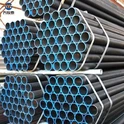
National standard steel pipes are made of steel ingots or solid tube billets through perforation into capillary tubes, and then made by hot rolling, cold rolling or cold drawing. National standard steel pipe has an important position in my country's steel pipe industry. According to incomplete statistics, there are currently more than 240 national-standard steel pipe manufacturers in my country, about 250 sets of seamless steel pipe units, and an annual production capacity of about 4.5 million tons. In terms of caliber, those with <φ76 account for 35%, and those with <φ159-650 account for 25%. In terms of varieties, general purpose pipes are 1.9 million tons, accounting for 54%; oil pipes are 760,000 tons, accounting for 5.7%; hydraulic props and precision pipes are 150,000 tons, accounting for 4.3%; stainless pipes, bearing pipes, and automotive pipes total 50,000 Tons, accounting for 1.4%.
【Overview】
The raw material for rolling the national standard steel pipe is a round tube blank. The round tube blank is cut by a cutting machine into a billet with a length of about 1 meter, and is sent to the furnace for heating via a conveyor belt. The billet is fed into the furnace and heated at a temperature of approximately 1200 degrees Celsius. The fuel is hydrogen or acetylene. The temperature control in the furnace is a key issue. After the round tube is out of the furnace, it must be pierced through a pressure punching machine. Generally, the more common piercing machine is the tapered roller piercing machine. This type of piercing machine has high production efficiency, good product quality, large perforation diameter expansion, and can wear a variety of steel types. After piercing, the round tube billet is cross-rolled, continuous rolled or extruded by three rolls. After squeezing, take off the tube and calibrate. The sizing machine rotates at a high speed through a conical drill bit to drill holes into the steel blank to form a steel pipe. The inner diameter of the steel pipe is determined by the length of the outer diameter of the drill bit of the sizing machine. After the national standard steel pipe is sized, it enters the cooling tower and is cooled by spraying water. After the steel pipe is cooled, it will be straightened. After straightening, the steel pipe is sent to the metal flaw detector (or hydraulic test) by the conveyor belt for internal flaw detection. If there are cracks, bubbles, etc. inside the steel pipe, it will be detected. After the quality inspection of steel pipes, strict manual selection is required. After the quality inspection of the steel pipe, paint the serial number, specification, production batch number, etc. with paint. It is hoisted into the warehouse by a crane.