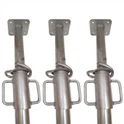
A steel pipe is a cylindrical tube made from steel and is the most utilized product in the steel industry. The primary use of steel pipes is in the transport of products—including oil, gas, and water over long distances. Common household appliances such as fridges use steel pipes, as well as heating and plumbing systems. Steel pipes come in a variety of sizes and can also be used for structural requirements like hand rails and pipe bollards.
William Murdoch is thought to be the pioneer of steel pipes, when he joined barrels of muskets together to invent a coal lamp burning system in 1815. Murdoch used his innovative piping system to transport coal gas to individual lamps on the streets of London.
Since the 1800’s great strides have been made in the technology of steel pipes including improving manufacturing methods, developing applications for their use, and the establishment of regulations and standards that govern their certification.
Steel pipe is produced in one of two methods, which result in either seamless or welded products.
Seamless pipe is made from solid round stock that is first heated, then extruded—pushed or pulled over a die, resulting in a hollow tube. This process gives the seamless pipe a smooth and even surface finish, without any visible joints. This product is more expensive than welded pipe, but is also considered more reliable, and can result in products with much higher strength and integrity.
Welded pipe is manufactured from steel sheets that are rolled, then welded longitudinally along the rolled joints. This results in a product that has a welded joint throughout. Welded pipe is less expensive than extruded, seamless pipe, but will not exhibit the same physical property characteristics, and is used mainly for low pressure applications or low-load requirements.
How are steel pipes made?
Whether the pipe is produced by welded or seamless methods, the first step for either process is to convert raw steel to a more usable form.
Raw steel is produced by melting raw materials in a furnace and controlling the composition through the addition of alloys and removal of impurities. Molten steel is poured into molds to make ingots, or transferred to a continuous casting machine to make plate, billets, and blooms. This raw steel must be converted to a form that can be rolled into pipes of specific dimensions or stretched into hollow tubes.
 Solid steel billets ready to be transformed into seamless steel pipe.
There are two main intermediate steel products that are used to make steel pipes:
Steel skelp is made from slabs that are heated to 2,200°F. The heat causes a scale to form on the surface, which must be removed through a scale breaker and high pressure cleaning. Once cleaned, the steel slab is hot rolled into thin, narrow strips of steel called skelp. Skelp is pickled (surface cleaned) with sulfuric acid, washed with water and rolled onto large spools as the raw material for pipe making. The width of the skelp determines the diameter of the pipe that can be made.
Steel billets can be produced directly from a continuous casting machine, or as a secondary product from cast ingots. The ingot is rolled and stretched through grooved and stacked rollers called “two high mills” to form blooms. To convert a bloom to a billet requires another sequence of rolling and stretching to form a solid billet with the required dimensions for the pipe specifications.
Welded Pipe
Skelp is unwound from the spool, heated, and rolled through grooved rollers, which bend the edges of the skelp upwards. This process produces a cylindrical tube where the two edges have been bent right around to meet each other forming a long cylinder. One of three welding processes are then used to join the edges together and seal the pipe.
Continuous welding
In a continuous welding operation, welding rollers press the edges of the pipe into each other—forming a forged weld due to the heat that has already been applied to the skelp. No metal is added during welding, and the final rollers reduce the diameter and wall thickness of the pipe to the specifications.Electric resistance welding
Electric resistance welding follows a similar process to continuous welding, except that the skelp is cold rolled into the pipe shape. Current is supplied to the pipe edges by revolving copper disks, which heat the edges up to the weld temperature. Welding rollers join the pipe edges to create the forged weld.Spiral welding
Spiral welding and double submerged arc welding use more conventional welding techniques and the addition of weld material to form the bond.
The equipment and infrastructure required to produce vast quantities of welded steel pipe is significant, as depicted in this video look inside an oil pipe manufacturing plant.
Seamless Pipe
Seamless pipes are produced without the need for welding. They are created by heating and stretching a solid steel billet, before piercing it to form the hollow center. Billets are heated to extreme temperatures making them white hot and then rolled under high pressure causing the billet to stretch out. A bullet shaped piercer is used to make the hollow center regular according to its dimensions. A series of milling operations follow to conform the pipe to the required specifications.
A fantastic overview of the entire seamless pipe manufacturing process - from steelmaking right through the finishing processes—can be seen is this “Seamless steel tubes production process” video.
Finishing steps
Pipes may be put through a straightening machine as a final process step before being fitted with joints at the end. Small bore piping is usually fitted with threaded joints, but larger bore piping is normally fitted with flanges which are welded onto the end of the pipe. Measuring machines check the dimensions of the finished pipe, and stamp the details on the side of the pipe for quality control purposes.
Quality control steps include checking the pipe for defects using x-ray machines—especially along the weld. Another technique is to pressure test the pipe by filling it with water, then holding it under pressure for a specified time to expose any defects that may cause catastrophic failure before it is put in service.