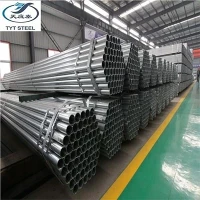
Steel pipes, due to the different methods of production, the variety of shapes, the types and technical properties, are one of the most popular building materials. However, it should be noted that the use of individual elements is defined by the types of steel pipes. Each type, apart from universal advantages, also has individual properties.
The type of steel pipe and its suitability for a specific task and project is therefore crucial from the point of view of the investor or the person supervising the construction. The material properties and production technology have an impact on their mechanical strength, their resistance to high temperatures, and their resistance to chemical agents.
Types of steel pipes used in the construction industry
The products can be divided into three types:
● welded steel pipes;
● seamless steel pipes; and
● insulated pipes.
The basic choice in most projects are steel welded pipes, which are manufactured by cutting and forming sheet metal. During the final stage, they are welded, which makes it possible to adapt the pipe for the specific needs of the customer. The diameter of the material can be both standardized and customized in terms of generally accepted sizes, as well as designed for a specific implementation, also for unusual needs, for example in the percentage of carbon.
As the production of welded pipes is based on the rolling of a sheet or steel strip into a cylinder format, it is necessary to connect the edges afterwards. This is done using high temperatures. Four methods are used for this: welding (joint connection, overlapping, on a rolling mill) and electric welding.
Regardless of which steel pipes are chosen by the investor, the key feature of the products is the durability of the joint. This also applies to the possible categorisation of the welded steel tubes depending on whether they are longitudinal or spiral.
Seamless pipes do not have a connection created by welding the ends. The lack of a seam makes the pipes recommended for projects where the risk of leakage is of key importance. This applies, for example, to lines that contain chemicals. The limitation of seamless pipes is their diameter; for technological reasons, the limit is 508 millimetres.
The use of pipes in the construction industry
Pipes are used in all sectors of construction work. There are a wide range of uses: from edge protection to protection of excavations. Steel pipes in the construction industry are also used for:
• drillings;
• airtight tubular walls;
• jacking;
• bored piles;
• culverts;
• bridge resistance; and
• construction elements.
Due to the durability and strength of the materials, steel pipes are also used to strengthen the ground.
Check the offer of steel pipes at FERGES
As a supplier of steel pipes, we sell all types of materials. Pipes offered by FERGES are made of high quality materials, ideal for various construction projects.
Check the list of products or contact the sales department for more details.