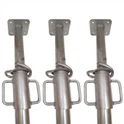
Navigating scaffold selection on site? The choice between traditional Coupler systems, Cup-lock scaffolds, and Ringlock Scaffolding can impact safety, efficiency, and cost. Here's a clear comparison to help you make an informed decision for your project.
1. Quick Overview: How They Connect
Coupler Scaffolding: Uses steel tubes connected with bolt-fastened couplers (right-angle, swivel, sleeve). Stability relies on friction from tightened bolts.

Cup-lock Scaffolding: Features vertical members with fixed upper and lower cup sockets. Horizontal members' plug ends insert into the cups and are locked by rotating the cup-a mechanical, plug-in connection.
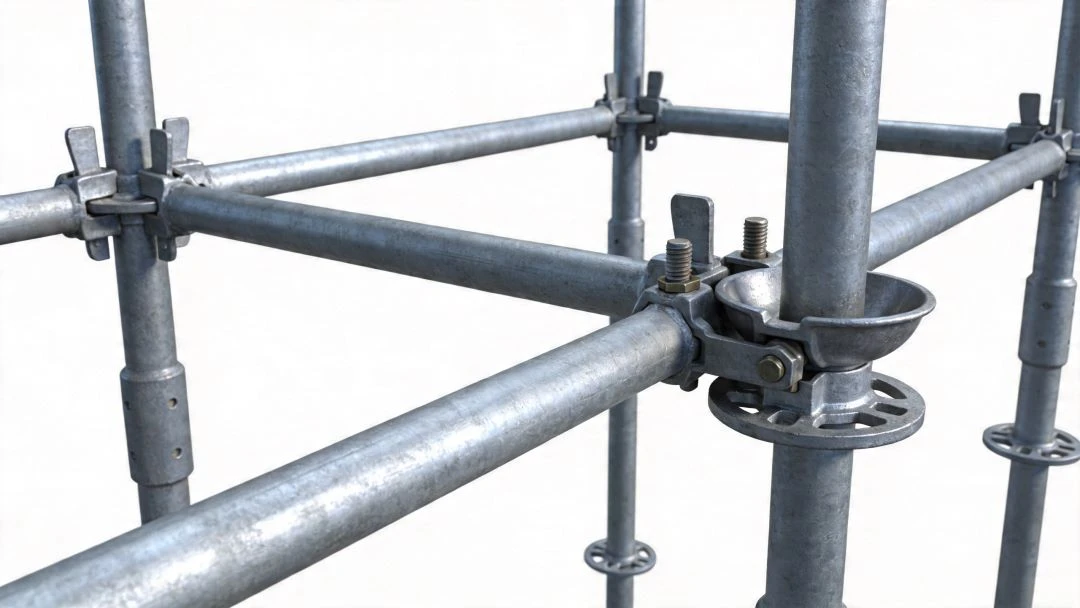
Ringlock Scaffolding: Has vertical members with welded circular connection discs. Horizontal and diagonal members use plug ends that insert into disc holes and are secured with self-locking wedge pins-forming an integrated, modular load-bearing structure.
2. Key Comparison Points
A. Application & Suitability
Cup-lock Scaffolding: Commonly used in bridge construction, municipal engineering, factory high-load support frames, and buildings with regular layouts. Fixed module sizes suit square, regular structures but can be challenging for complex facades. Its use in residential exterior scaffolding is declining.
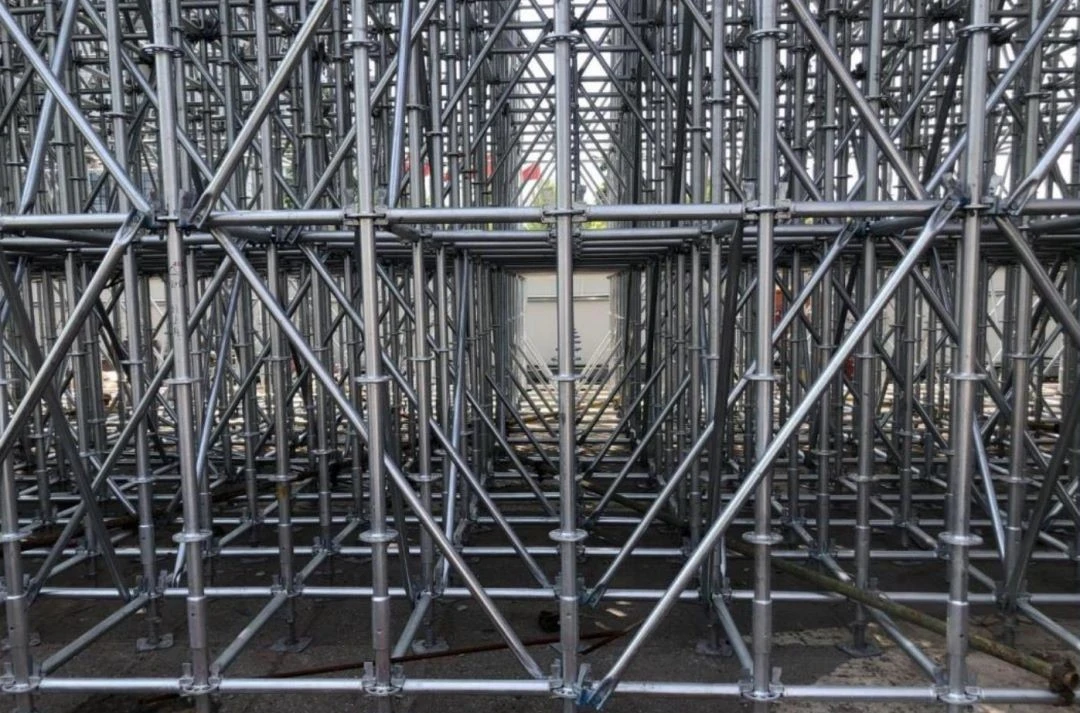
Ringlock Scaffolding: The premier choice for high-rise building exteriors, large complexes, standard factories, municipal bridges, and ultra-high support systems. High standardization offers superior overall stability. Now preferred for new residential and large-scale projects. Adjustable members can accommodate complex facades.
B. Cost Considerations
Cup-lock Scaffolding: Mid-range cost.Equipment cost is higher than coupler but lower than modular systems; rental rates are moderate. Fixed components limit versatility, and turnover efficiency is average, making it cost-effective for mid-sized, regular projects.
Ringlock Scaffolding: Highest initial investment.High-standard materials and manufacturing lead to higher purchase/rental costs. However, components are durable with minimal loss. For long-term, large-scale repeated use, the per-use cost decreases significantly.
C. Safety & Stability
Coupler Scaffolding: Lower safety baseline.Stability depends on bolt tightness, which can vary, leading to loosening, slippage, or detachment. Overall rigidity is weaker, with moderate resistance to overturning or impact. Higher risk in high-wind or heavy-load scenarios requires stringent on-site safety management.
Cup-lock Scaffolding: Moderate safety performance.Integrity is better than coupler systems; locked nodes are secure and resist shaking. However, lacking a dedicated diagonal bracing system can lead to instability at height.
Ringlock Scaffolding: Highest safety rating.The self-locking pin mechanism prevents loosening. Integrated horizontal, vertical, and diagonal bracing forms a complete load-bearing frame. The system offers superior integrity, rigidity, minimal settlement deformation, and excellent wind/overturning/load resistance-providing the safest option for high-altitude work and highest compliance acceptance rates.
D. Installation Efficiency
Coupler Scaffolding: Slowest installation.Every node requires bolt tightening-a tedious process. Assembly/disassembly is time-consuming, labor-intensive, and prolongs schedules.
Cup-lock Scaffolding: Moderate speed.No screws needed; simple cup rotation locks components. Installation is noticeably faster than coupler systems.
Ringlock Scaffolding: Fastest installation.Hammering pins locks components. Modular assembly allows rapid connection-speed is approximately double that of coupler systems-significantly saving time and reducing on-site labor.
E. Maintenance & Turnover
Coupler Scaffolding: Tubes bend easily; couplers are prone to loss/damage. High turnover loss leads to quick depreciation with repeated use.
Ringlock Scaffolding: Heavy-duty materials offer excellent corrosion resistance and minimal deformation/damage. Supports the highest number of turnover cycles, delivering the best long-term value.
3. Summary & Recommendations
For short-term, small projects, renovations, buildings with complex/irregular facades, or tight budgets:Choose Coupler Scaffolding.Its unmatched flexibility and low cost best suit niche, scattered construction needs.
For municipal bridges, regular factory buildings, or medium-scale load-bearing support projects:Choose Cup-lock Scaffolding.It balances stability, ease of use, and moderate cost, meeting standard heavy-load requirements.
For high-rise buildings, large developments, high-standard projects, or time-sensitive schedules:Ringlock Scaffolding is the superior choice.It leads comprehensively in safety compliance, installation speed, site appearance, final inspection, and long-term turnover. While initial rental costs are higher, it reduces safety risks, shortens timelines, cuts labor costs, and avoids rework expenses-delivering the highest overall cost-benefit. It is the industry's preferred upgrade for exterior scaffolding.
Contact us for professional scaffolding solutions tailored to your specific needs.