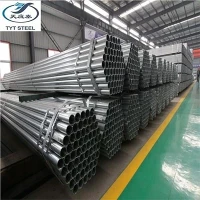
Although steel pipe is often described simply as "galvanized," there is no single international method for specifying its zinc coating. Different standards express the requirement in different units, and some distinguish between geometric thickness and coating mass per unit area.
China commonly uses micrometres (µm), while ASTM-based specifications frequently use grams per square metre (g/m²) or ounces per square foot (oz/ft²). ISO, EN, JIS, and AS/NZS documents generally use g/m², while commercial specifications may use mils.
Despite the apparent differences, these expressions can describe equivalent levels of protection, provided that the average and local requirements, applicable standard, and test method are correctly understood.
1. Main Methods of Expressing Zinc Coating Thickness
The main methods of expressing zinc coating thickness can be compared by their typical units and areas of use.
| Expression | Typical form | What it represents | Common use |
|---|---|---|---|
| Micrometre | µm, μm | Geometric coating thickness | China, engineering specifications |
| Mil | mil, mils | Geometric coating thickness; 1 mil = 0.001 inch | North American commercial specifications |
| Coating mass | g/m² or kg/m² | Mass of zinc coating per unit area | ISO, EN, JIS, AS/NZS, ASTM |
| Coating weight | oz/ft² | Zinc mass per unit area, despite the term "weight" | United States and ASTM-based projects |
| Coating weight | lb/ft² | Zinc mass per unit area | Occasionally used in heavy-coating specifications |
Understanding the distinction between geometric thickness and coating mass per unit area is essential for international procurement, as different standards rely on different measurement methods.
Although coating weight and coating mass are sometimes treated as interchangeable, they represent mass per unit area rather than a direct measurement of geometric thickness.
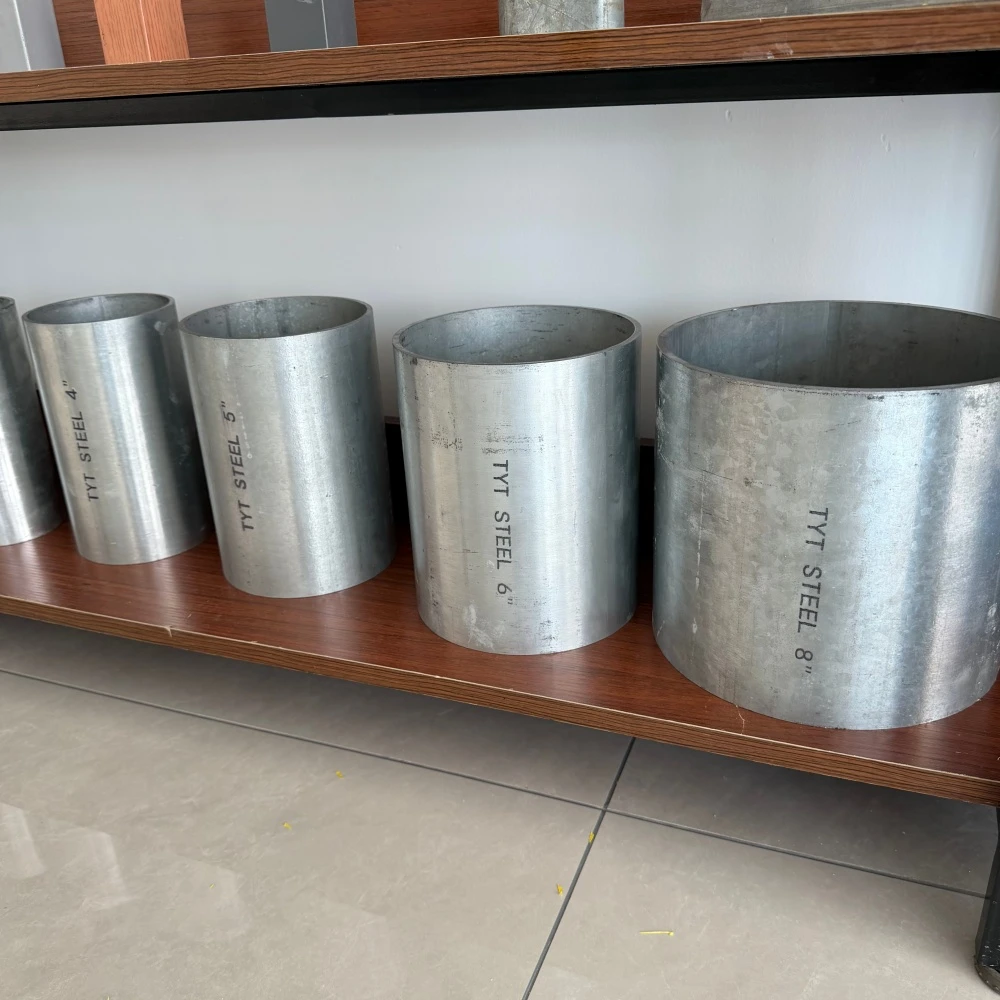
2. Regional Standards and Common Units
The governing product and coating standards-rather than the country itself-ultimately determine how a requirement is written.
| Region | Commonly referenced standards | Usual expression | Notes |
|---|---|---|---|
| China | GB/T 13912 and applicable steel-pipe standards | µm | Average and local minimum thicknesses are commonly specified |
| United States and Canada | ASTM A53/A53M for steel pipe; ASTM A123/A123M for galvanized coatings | g/m² or oz/ft² | "Mean" and "local" coating mass are distinguished |
| Europe and the UK | ISO 1461; EN 10225 where specified for welded tubes | g/m² | EN documents normally adopt or refer to ISO requirements |
| Japan | JIS H 8641 and relevant JIS pipe standards | g/m² | Usually based on average and local coating mass |
| Australia and New Zealand | AS/NZS 4680 | g/m² | Average and local coating mass are normally stated |
| International projects | ISO 1461, ASTM A123/A123M, or a project-specific specification | Contract-dependent | The contract must state the standard, edition, unit, and test method |
The supplied Chinese reference identifies ASTM A123-17, ISO 1461:2009, and GB/T 13912-2002 as the principal international and Chinese standards. 3 Since standards are periodically revised, purchasers should verify the edition required by the relevant jurisdiction or project.
3. How China Expresses Zinc Coating Thickness
Under the Chinese framework summarized in the source material, GB/T 13912-2002 classifies galvanized coatings according to minimum average and minimum local zinc-coating thicknesses.
| Coating class | Minimum average thickness | Minimum local thickness |
|---|---|---|
| Light | 35 µm | 25 µm |
| Medium | 45 µm | 35 µm |
| Heavy | 65 µm | 50 µm |
These values are summarized from the supplied Chinese source. They should be checked against the official standard and any pipe-specific procurement requirements before being used in a contract.
4. Understanding Average and Local Requirements
These two measurements should not be treated as interchangeable.
Average thickness or mean coating mass
This is based on the total coating mass over a defined test area. It generally represents the overall level of galvanizing applied to the product.
Local thickness or local coating mass
This is a value obtained from an individual test location. A coating may satisfy the average requirement while still failing if one measured location is below the specified local minimum.
Consequently, a requirement such as "45 µm average" does not mean that every point on the pipe must have at least 45 µm of zinc.
5. Converting Between Units
For pure zinc, the commonly used theoretical density is approximately 7.14 g/cm³. Based on this density, the following conversions can be used.
| Conversion | Formula |
|---|---|
| µm to mils | Divide by 25.4 |
| mils to µm | Multiply by 25.4 |
| µm to g/m² | Multiply by 7.14 |
| g/m² to µm | Divide by 7.14 |
| oz/ft² to g/m² | Multiply by 305.2 |
| g/m² to oz/ft² | Divide by 305.2 |
| oz/ft² to mils | Multiply by approximately 1.682 |
For example, a Chinese requirement of 45 µm average thickness and 35 µm local thickness can be expressed approximately as follows:
| Requirement | µm | mils | g/m² | oz/ft² |
|---|---|---|---|---|
| Average | 45 | 1.77 | 321 | 1.05 |
| Local minimum | 35 | 1.38 | 250 | 0.82 |
These values are technical conversions only. They should not automatically be treated as equivalent acceptance criteria under ASTM or ISO.
Important conversion limitations
Several important limitations apply to these calculations. A coating mass does not provide an exact measurement of geometric thickness, as hot-dip galvanized coatings may contain iron-zinc alloy layers and other variations. Furthermore, the calculation of 7.14 g/cm³ applies to zinc, whereas zinc-aluminum and other alloy coatings require different density factors. Additionally, ASTM and ISO requirements should be evaluated using the specified coating-mass test method, and merely converting the stated acceptance value does not make a product compliant with another standard. Finally, using "gauge" to describe zinc coating thickness is discouraged, since gauge normally refers to the thickness of a sheet or pipe wall.
6. A Practical Example
A Chinese purchaser might specify:
The galvanized steel pipe shall have a minimum average zinc coating thickness of 45 µm and a minimum local zinc coating thickness of 35 µm, tested in accordance with GB/T 13912.
An ASTM-based equivalent might be written as:
The hot-dip galvanized steel pipe shall comply with ASTM A53/A53M and ASTM A123/A123M. The minimum mean coating mass shall be ___ g/m², and the minimum local coating mass shall be ___ g/m², equivalent to ___ oz/ft².
The second wording leaves no ambiguity about whether the coating is being specified by thickness or by coating mass.
Conclusion
The international language of galvanized-steel-pipe coating thickness encompasses several units. Micrometres (µm) represent geometric thickness, while mils provide another thickness unit common in North American commercial use. Furthermore, g/m² or kg/m² indicate coating mass per unit area, and oz/ft² serves as the customary-unit expression of coating weight.
While these units can be converted, the conversion should only be used as a technical reference. Compliance must always be assessed against the specified standard, edition, average requirement, local requirement, and test method.